
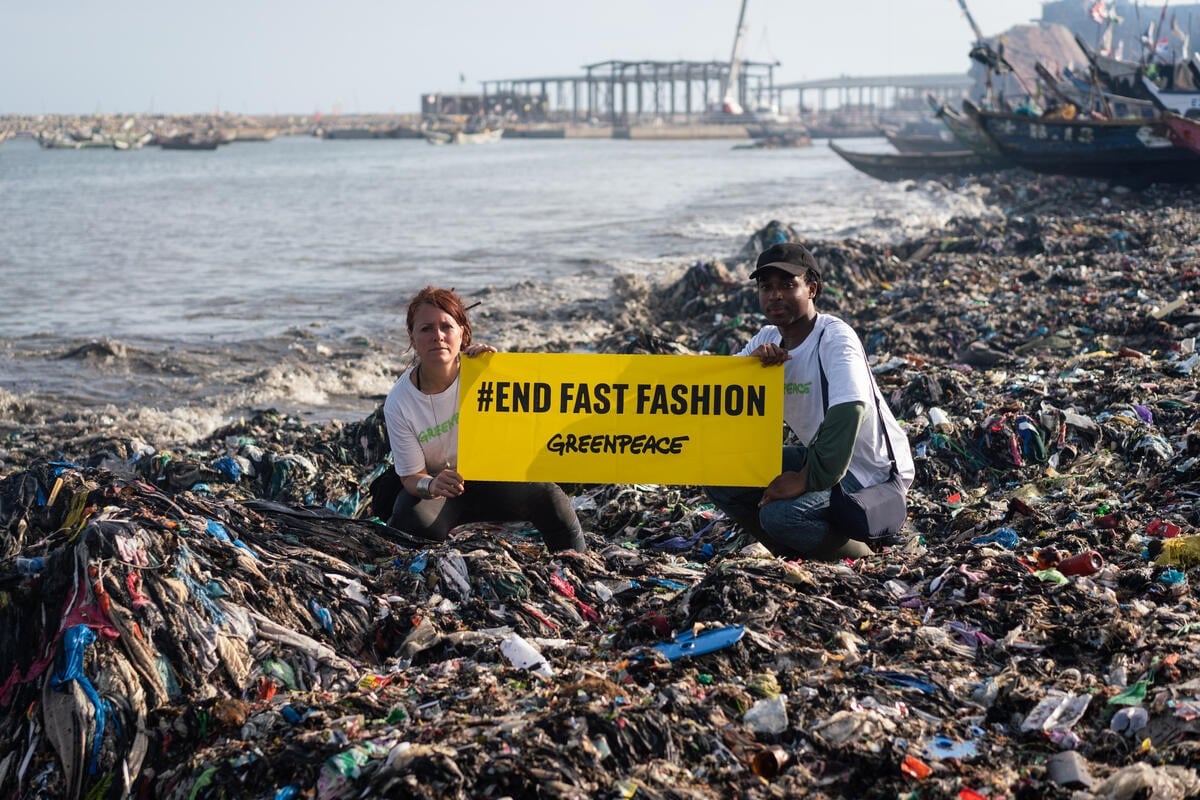
Fluctuating fashion trends can be difficult to navigate; however, companies like Shien, Zara, and H&M offer swift access to the latest mania. Utilizing cheap manufacturing methods to produce low-quality clothes in a timely manner evidently pollutes the planet on a daily basis. Nonetheless, fast fashion dominates our wardrobes. We’re quick to restock our closet by donating or tossing last month’s trends to then make room for more. What is called “spring cleaning” or “decluttering,” in reality, is polluting the environment. Therefore, fast fashion has ultimately contributed to environmental deterioration given an increase in carbon emission and shoreline pollution.
Fast fashion can be defined according to an environmental journal, “The Environmental Impact of Fast Fashion, Explained,” by scholar Rashmila Maiti, as inexpensive clothing mass-produced by major manufacturers in response to the latest catwalk styles. These companies target Gen-Z and Millennials who often seek affordable clothes, despite their poor quality. Consequently, Shein is responsible for contributing to a large portion of carbon emissions. According to Sachi Kitajima Mulkey, at Yale Climate Connection, states “Shein emitted 16.7 million total metric tons of carbon dioxide in 2023.” By utilizing AI technology that emits toxins like carbon dioxide to operate, Shein can predict trends in order to satisfy eager consumers. Mulkey also argued that, “Shein’s third annual sustainability report, released late last month, which showed the company nearly doubled its carbon dioxide emissions between 2022 and 2023.” Following Shein’s pledge to decrease their carbon footprint by 2030, which has shown no sign of progress given a severe increase in the company’s carbon dioxide emanation.
However, the issue does not only trace back to manufacturers, but also to ignorant consumers. Pop-culture has conditioned Gen-Z and Millennials; if you wear an outfit once, you can’t wear it again. As a result, billions of individuals discard perfectly good clothing each year into dumps or overflowing donation bins. Maiti further remarked in her article, “The industry dries up water sources and pollutes rivers and streams, while 85% of all textiles go to dumps each year.” Therefore, this eco-conscious issue stems further with consumers purchasing cheap clothes that consist of toxic materials like microfibers that require destructive manufacturing, and dumping them into landfills once a trend is forgotten. These articles of clothing take decades to biodegrade, so while your clothes rot in landfills, the condition of the environment continues to decay.
Although doing laundry may seem like a weekly chore, it’s also an act of pollution. This is because most modern clothes consist of microplastics, polyester, and acrylics. These materials are cheap, so for manufacturers like Zara and H&M, using these toxic yet inexpensive materials is crucial for cutting financial corners. However, after every wash these materials eventually drain into the ocean or other bodies of fresh water. Victoria Gill, an award-winning science correspondent, states, “When we sample, we find plastic fibres less than the width of a human hair – in fish, in deep sea sediments, as well as [floating] at the surface.” Thus, low-grade clothing continuously pollutes the ocean and marine life apart from the multitude of other toxins floating around in the ocean.
Overall, fast fashion is a threat to nature, economics, and society. Wasting money on cheap clothing to keep up with trends is a pathetic act against the environment. Instead of idolizing a favorite influencer, think about their carbon footprint and how it may impact the environment when participating in trends. Nonetheless, it’s important that individuals invest in clothing made with organic material that won’t emit toxins into the atmosphere or bodies of water. To make efforts possible, Shein, Zara, and H&M should be motivated to produce sustainable clothing in order to protect the environment and to offer better quality clothing. That being the case, on your next trip to the mall or shop online, think to yourself, “Where will this shirt end up in five years?”